📥 Download FREE desktop wallpaper
🖼️ View artwork details & shipping
📸 Request a free wall preview
“Witness (2)”
Description:
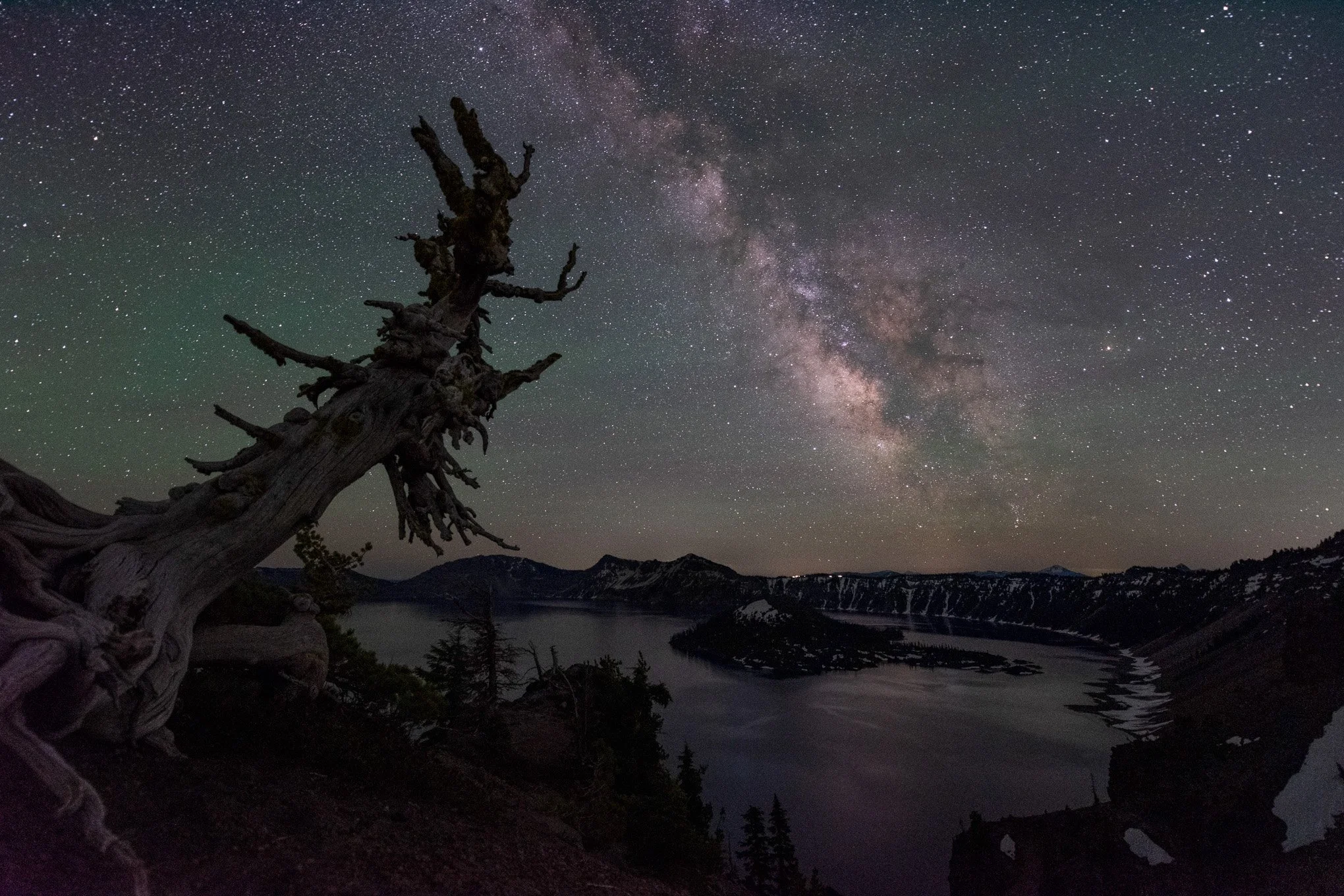
Crater Lake, formed when Mount Mazama collapsed about 7,700 years ago, is one of the darkest night sky areas in Oregon. On clear summer nights the Milky Way stretches over the caldera in breathtaking detail, creating one of the most unforgettable views in Crater Lake National Park.
Story:
Witnessing the Milky Way sweep across the night sky over Crater Lake was a once-in-a-lifetime experience. With no moonlight, wildfire smoke, or clouds to interfere, the Milky Way burned brilliantly in a tapestry of stars and darkness.
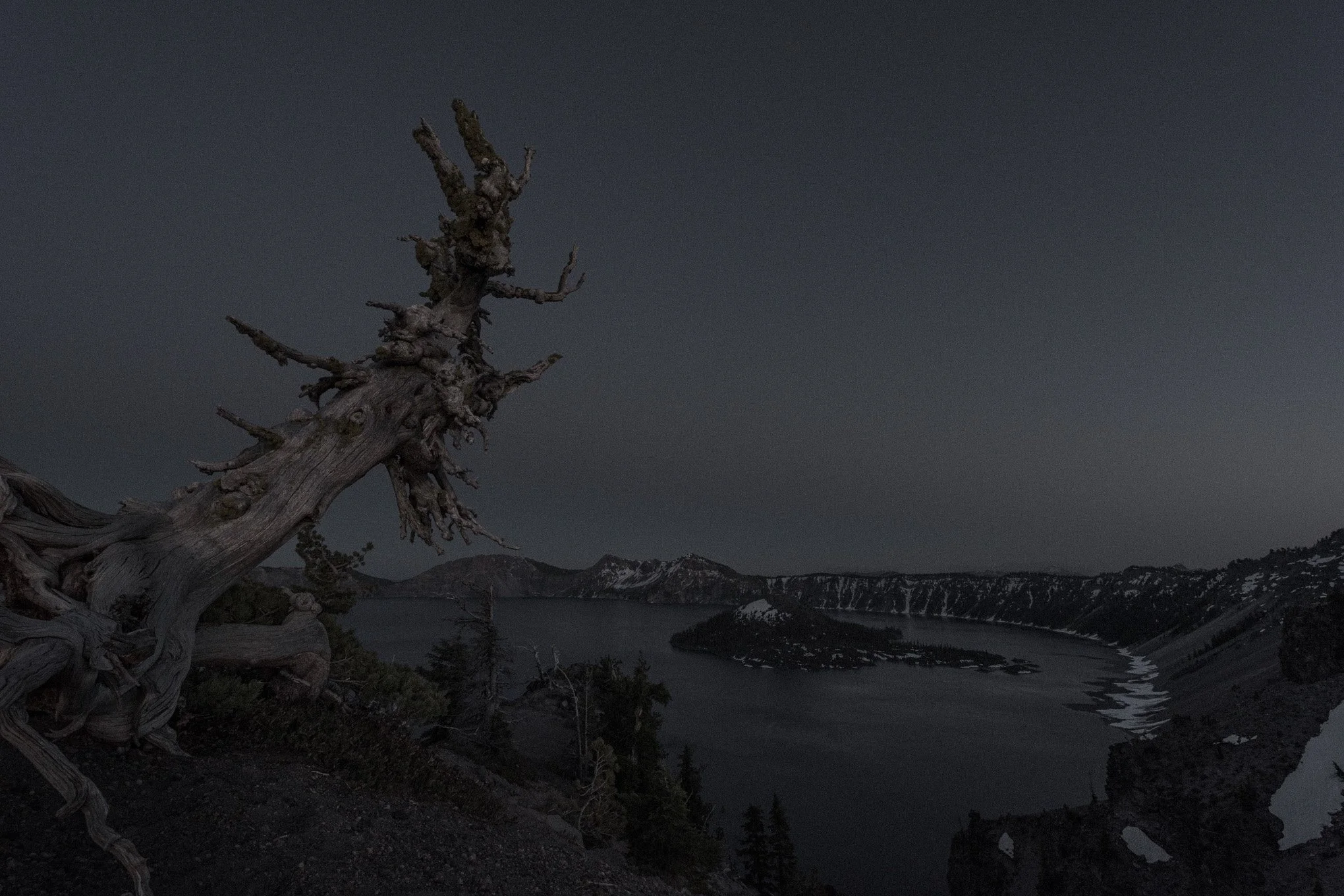
Of course, this photograph shows richer color and more stars than you see in person. A long exposure allows the camera to collect more starlight than our eyes ever could. You might notice a green tint across the sky — that’s airglow. It’s real, but not something easily visible without a camera. I didn’t notice it myself until reviewing the images later on my computer.
But what the camera can capture, it can’t replace the personal experience of being there. The wind was strong that night, gusting pumice and ash from the crater rim into my face and onto my gear. On either side of me were other photographers sharing the same moment. We chatted while waiting for the right conditions, each of us with our own vision for the scene unfolding before us.
I planned this composition carefully. I placed the camera so the branches of the gnarled juniper in the foreground would clear the crater rim without overlapping it — and without blocking the Milky Way. Almost nothing in this frame was accidental, yet nature’s beauty still surprised me.
-BAP
Location:
Crater Lake National Park
Oregon
42° 57' 50.8" N, 122° 09' 11.6" W
Google Map Link
Time: 21:20-00:38 PDT
Date: June 28th-29th, 2022
Camera & Settings:
Composite photograph
• Tree (1 exposure):
ISO 800, 14 mm, f/8, 1/20 sec
• Foreground and Sky (6 Exposures):
ISO 3200, 14 mm, f/2.8, 20 sec
• 33 Dark Frames
ISO 3200, 14 mm, f/2.8, 20 sec
Nikon D810, NIKKOR 14-24 mm f/2.8G, Tripod
📥 Download FREE desktop wallpaper
🖼️ View artwork details & shipping
📸 Request a free wall preview
“Witness (2)”
Description:
Crater Lake, formed when Mount Mazama collapsed about 7,700 years ago, is one of the darkest night sky areas in Oregon. On clear summer nights the Milky Way stretches over the caldera in breathtaking detail, creating one of the most unforgettable views in Crater Lake National Park.
Story:
Witnessing the Milky Way sweep across the night sky over Crater Lake was a once-in-a-lifetime experience. With no moonlight, wildfire smoke, or clouds to interfere, the Milky Way burned brilliantly in a tapestry of stars and darkness.
Of course, this photograph shows richer color and more stars than you see in person. A long exposure allows the camera to collect more starlight than our eyes ever could. You might notice a green tint across the sky — that’s airglow. It’s real, but not something easily visible without a camera. I didn’t notice it myself until reviewing the images later on my computer.
But what the camera can capture, it can’t replace the personal experience of being there. The wind was strong that night, gusting pumice and ash from the crater rim into my face and onto my gear. On either side of me were other photographers sharing the same moment. We chatted while waiting for the right conditions, each of us with our own vision for the scene unfolding before us.
I planned this composition carefully. I placed the camera so the branches of the gnarled juniper in the foreground would clear the crater rim without overlapping it — and without blocking the Milky Way. Almost nothing in this frame was accidental, yet nature’s beauty still surprised me.
-BAP
Location:
Crater Lake National Park
Oregon
42° 57' 50.8" N, 122° 09' 11.6" W
Google Map Link
Time: 21:20-00:38 PDT
Date: June 28th-29th, 2022
Camera & Settings:
Composite photograph
• Tree (1 exposure):
ISO 800, 14 mm, f/8, 1/20 sec
• Foreground and Sky (6 Exposures):
ISO 3200, 14 mm, f/2.8, 20 sec
• 33 Dark Frames
ISO 3200, 14 mm, f/2.8, 20 sec
Nikon D810, NIKKOR 14-24 mm f/2.8G, Tripod

 Image 1 of 4
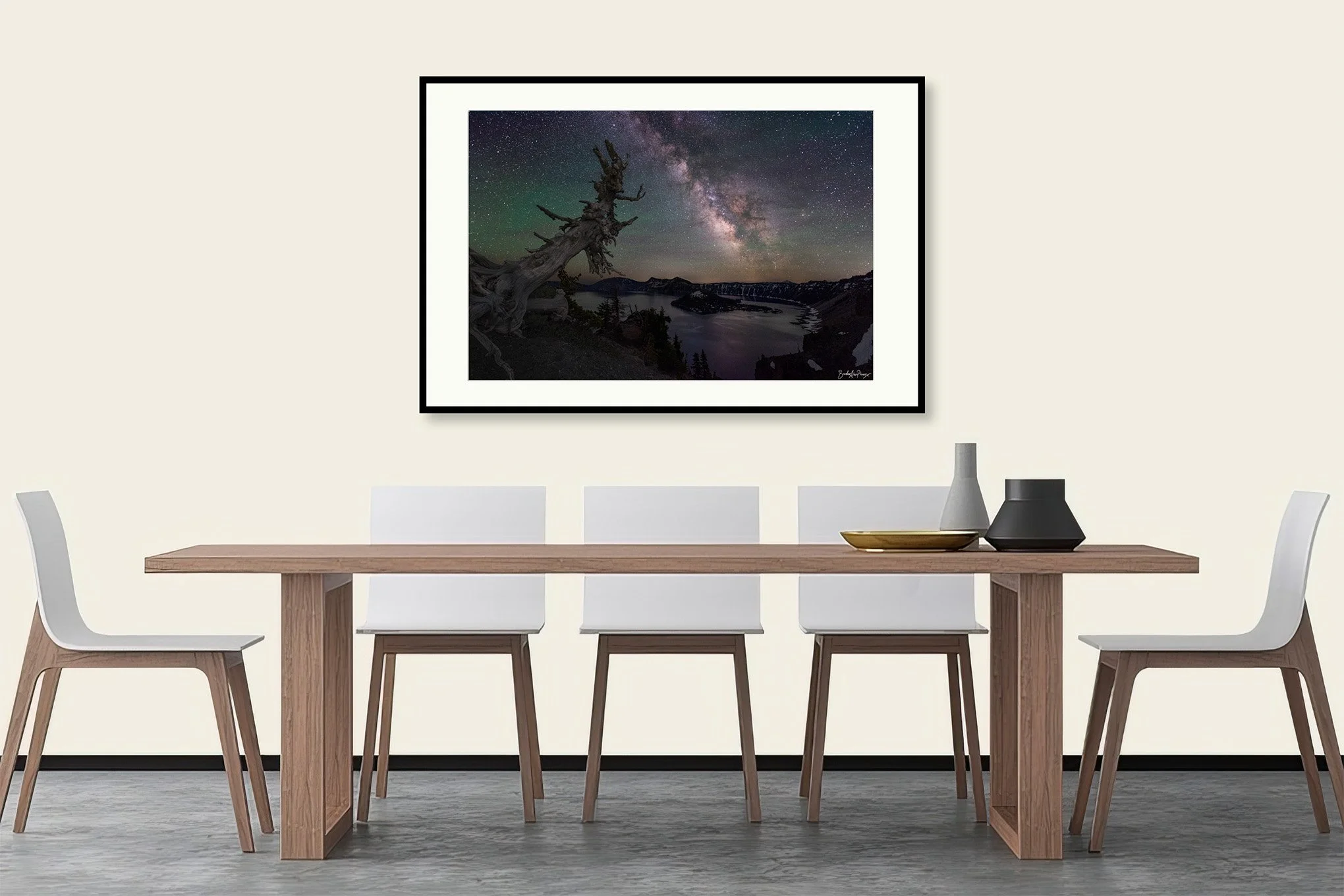 Image 2 of 4
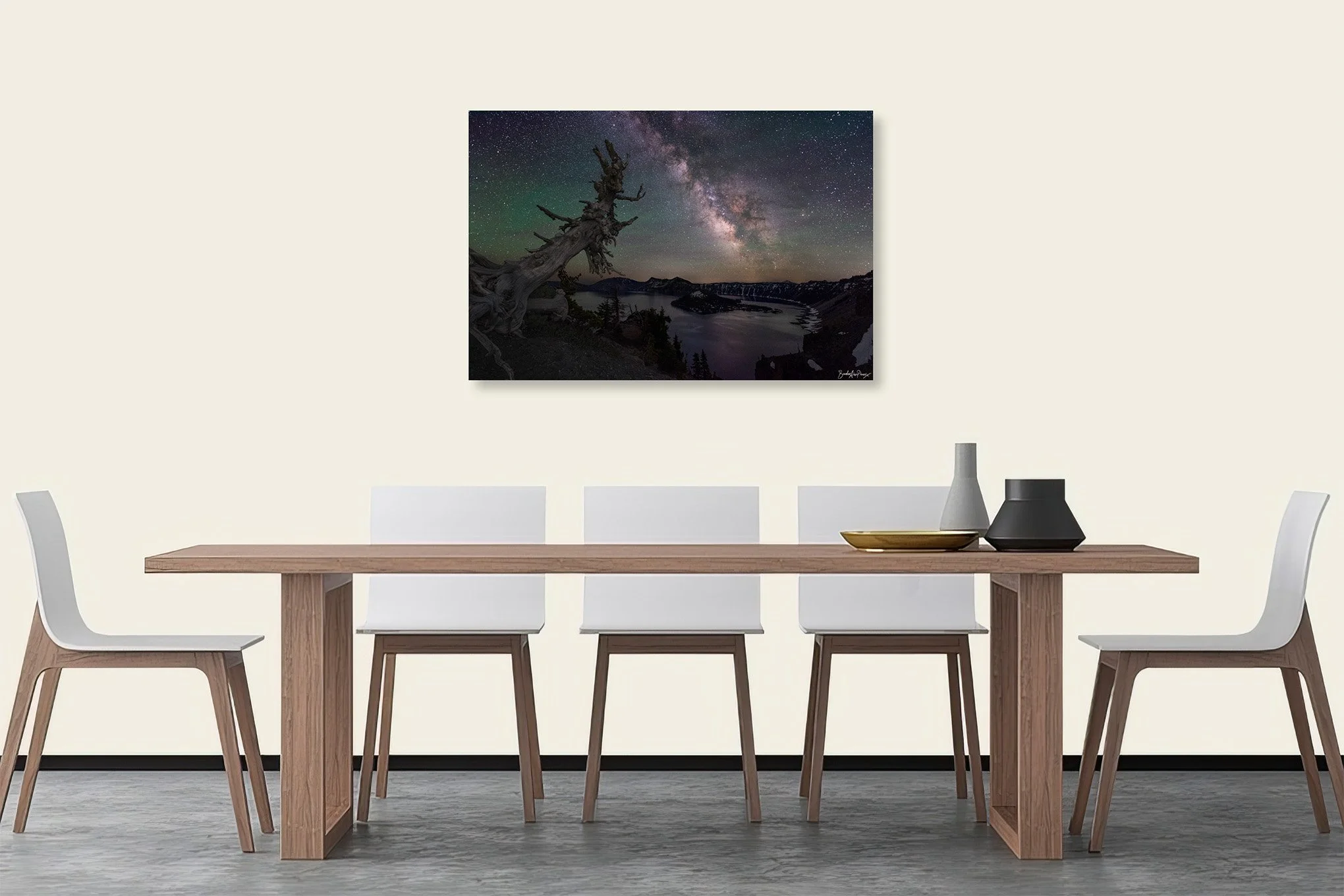 Image 3 of 4
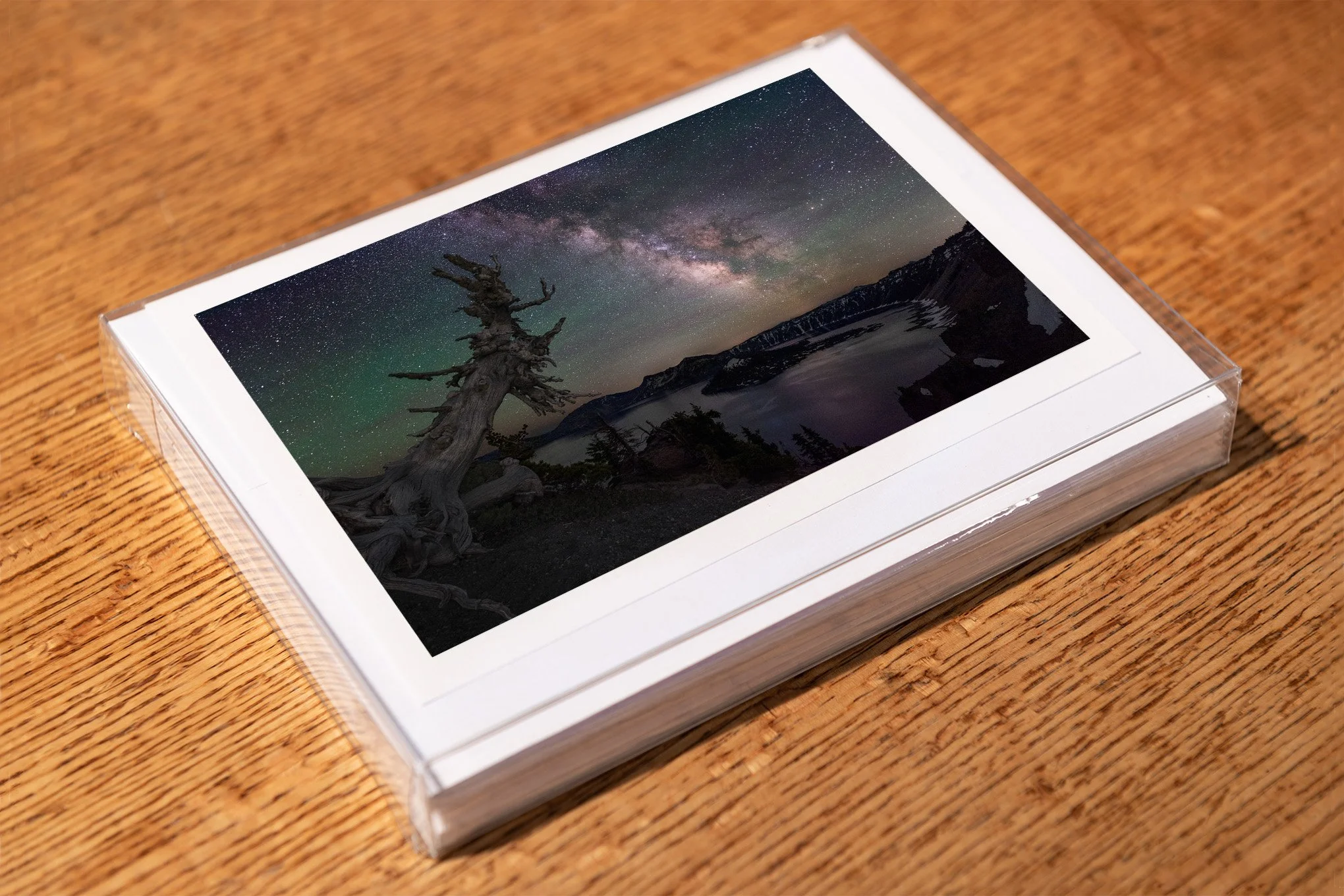 Image 4 of 4